
Saul becomes king
Background: When the people wished to replace their theocracy by a monarchy, Samuel decided that the election of a king needed to be legitimized by casting lots. The lot was used as an expression of trust in God that he ordains all things (Prov 16:33). The ceremony was to be held in Mizpah, which in Hebrew means watchpost (named by the patriarch Jacob, Gen 31:49).
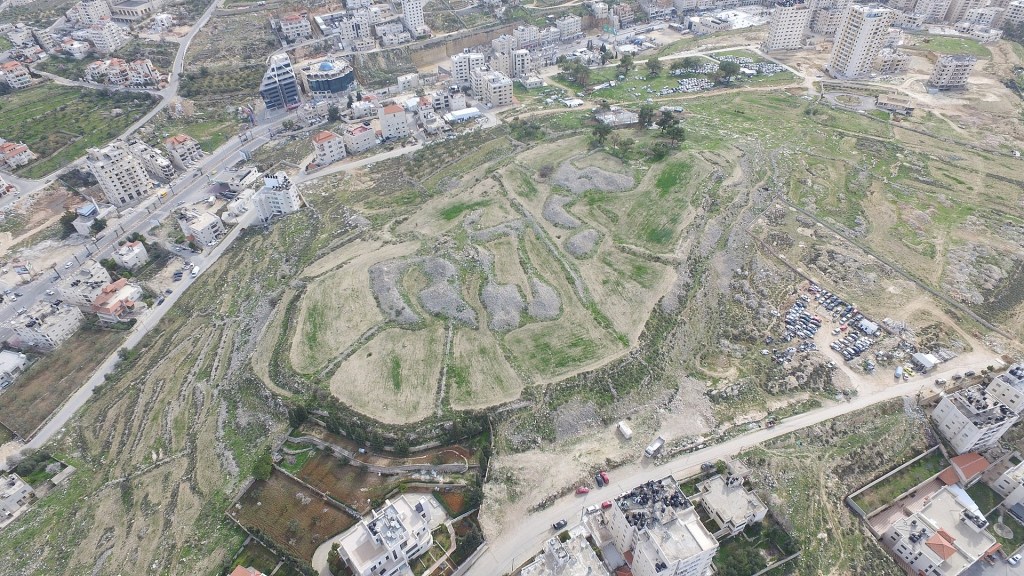
Tell en-Nasbeh, one of two sites identified with Mizpah, about 12 km north of Jerusalem.
Mizpah was the base for a campaign against the Ammonites already under Jephthah: He lived in Mizpah and made his imprudent vow there (Jdg 11:29-30) when he was called upon to organize the defense of his birthplace Gilead (Jdg 10:17-11:40). Mizpah was also Israel’s rallying point to punish the tribe of Benjamin for their rape of a Levite’s concubine in Gibeah, Jdg 19-20, and where they vowed to kill everyone who would not join their punitive expedition, Jdg 21:5.
Read: 1.Samuel 10:17-11:15
1) 10:17 Where did Samuel convocate the Israelites when he called them to Mizpah?
- In what sense did they gather “before the Lord”, if the ark of the covenant was elsewhere in Kirjat Jearim (1Sa 7:2)?
2) 10:17-19 Why did Samuel equate the transition to a monarchy with rejecting God?
- How did the people loose hope that God can deliver us from all calamities, v19, and how did they come to believe that kings and politicians can?
- What precipitated a similar shift in Western culture, e.g. during the Enlightenment at the transition to the modern era?
- How do unfaithful priests contribute to discredit God during such times? 1Sa 8:3
3) 10:20-22 Why did Samuel still cast lots even after he had already anointed Saul as king?
- Why didn’t Samuel simply use his own authority to instead directly tell the people who was the man for the job? Why risk that casting lots could get it wrong?
- When the lot fell on Saul, what is that miracle meant to teach the readers?
- No lots were cast to appoint David or any other king after Saul: Why not?
- How did the people react when the lot fell on someone who seemed to be missing? 10:22
- Why did Saul’s hiding make them question the verdict of the lots?
- Even after Saul was elected, some despised this outcome, v27: Why did they doubt that ‘the decision of the lot is from the Lord’, Prov 16:33?
4) ‘Saul was hiding among the baggage’. Why did it take another oracle of God to find him there, and what is there to ‘behold’ about it?
- Did Saul fear to be elected, or rather that the lot could still fall on someone else? In other words: Was his reluctance to openly stand for election a virtue? Or are we to behold Saul’s lack of faith? (i.e. how he minimized the risk of becoming a laughingstock once again, cf 10:11-16)?
5) In Samuel’s previous prophecies, Saul witnessed how they were fulfilled minutiously (10:2-6), including his own charismatic experience, v6. What was that experience all about?* cf10:10
- When an experience of the Holy Spirit turned Saul into another man, what changed, and what didn’t?
- Despite these manifestations of the Holy Spirit, Saul continued to fear rejection by the people more than he feared God. Why was that, both here when he hid himself, and when obedience to God required unpopular decisions (15:24), and later when the people favored David (18:7-8)?
- The signs that Saul was chosen by God to become king included not only Samuel’s prophecy, but also the outcome of the lot casting. Did either of these change Saul into a new man? Why not?
- What would have been needed for him to become a man of faith like Samuel and others before and after him in the OT?**
6) When Samuel wrote a constitution to define the rights and the duties of the future king (10:25), Saul’s lack of faith did not yet make him unfit for this position. Why else did some ‘worthless fellows’ (ESV) question Saul’s suitability, 10:27?
- As Saul was eventually rejected also by God, why were they called worthless who did so from the start?***
- What do you think of how Saul handled opposition at this stage?
7) 11:1-7 What angered Saul about the news from Jabesh-Gilead?al & application
- The Ammonites besieged the town where his mother or grandmother might have come from (Jdg 21:8-13). Why didn’t they send any messengers to Saul, v4?
8) 11:8-15 was a happy beginning of Saul’s career. What virtues of Saul stand out as commendable?
- If you were in Samuel’s shoes, is there anything that you would have regarded as missing in Saul’s leadership style until this point in the story?
* An ecstatic experience of the Holy Spirit overcame Saul also during his pursuit of David and Samuel so that he could not kill them, 1Sa 19:18-23, i.e. even after he was already given over to an evil spirit for his torment, 18:10; 19:9.
** Saul was no closed case: Although Samuel was disappointed by the people’s desire for a monarch, he saw in Saul more potential than in anyone else. However, Saul’s lack of faith in God’s word and in its infallibility became even more clear at a later stage, 13:14; 15:23.
*** Their rejection of Saul was not motivated by faith in God and by submission to His word, but by their unbelief that God could use Saul for their deliverance in whichever way He chose to do so, cf 14:47-52 (even though this success fomented Saul’s pride and apostasy, 1Sa 15).
 Bibletogetherblog