
Seven evils over which God rules, yet without being complicit
Chapter 39 seems to continue along the line that the unfathomable wisdom of how God ordered the universe equally applies to how he sustains animated beings. However, only seven animals are featured here, and nothing seems to set them apart that would justify their inclusion on the list, except if they are chosen as metaphors. So how do these illustrate how completely the secret will of God is beyond us to search or comprehend?
- vv1-4: For starters, the ‘riddle’ of how literal mountain goats procreate would not qualify. Knowing the season when they give birth can be discovered by anyone who cares to observe them, and certainly by the ‘greatest among the people of the east’ who owned 11’000 livestock (Job 1:3). So what else is beyond our comprehension here?
- God works all things in all according to their nature, as Martin Luther concluded from texts such as 1Cor 12:6. Since goats are goats, they are bound to think and act like goats, even if they ‘authenticate’ themselves with a show of piety to look like sheep (Mt 25:32).
- And yet, God created them as well, and he surely cannot be surprised by what they do as goats.
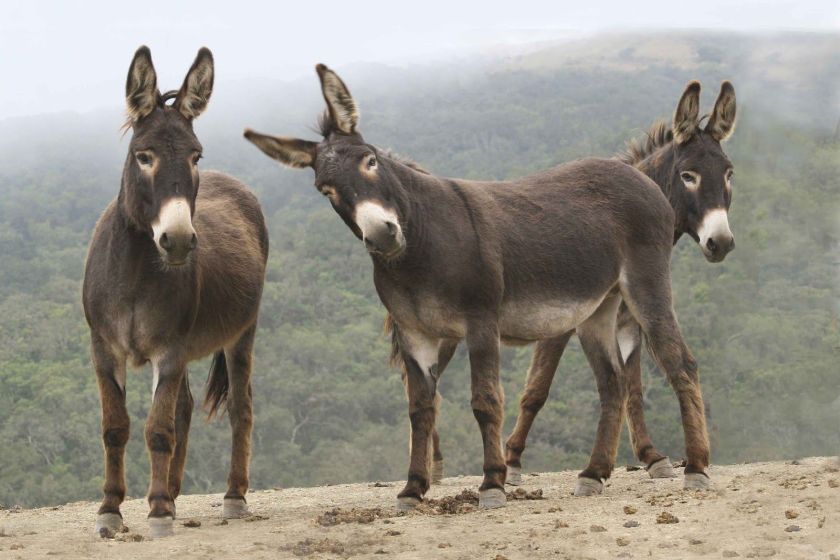
- vv5-8: Likewise, liberating a literal donkey from its domestication so that it will adapt to the wilderness restrained by none but natural laws surely takes no supernatural powers.
- Thus, a different aspect of God’s trustworthiness must be in view:
- By comparing the plight of the oppressed with the life of wild donkeys, Job had charged God of injustice (25:4-12). Now God answered: “What do you know? These donkeys have their pride and a life too. No one but Me gives breath to them as well, but still I can never be complicit in anyone’s evil.” For if it were otherwise, God would by definition cease to be God (as discussed earlier, 34:10-12).
- Elsewhere, the proverbial stubbornness of donkeys is also God’s metaphor for the hardening of unregenerate Israelites (1Sa 9:3) who rejected Him when they chose Saul as their king (1Sa 8).
- God in his perfect wisdom owns the deceived and the deceiver (12:7-25, v16). Even evildoers can do nothing were it not given to them from above; but never does this make God the author of evil (37:23; cf Jn 19:11).*
- “You always have the poor with you, and whenever you want, you can do good to them. But you will not always have me“, Jesus said to those who confused his gospel with a christless social cause (Mk 14:7). He did not explain social injustice, or question God for it: How God can be perfectly righteous if He created and sustains a world inhabited by rebels and by Satan as their leader is not something our finite reason can grasp. Thus, we can only believe God with childlike trust that He knows what He is doing, and that this is enough for us to know.
- Or we may join the rebellion: There is no third option. But unbelief has no better answer to offer than faith: “He who argues with God, let him answer it” (40:2), i.e. let him try; he will achieve nothing, atheism will never be able to make more sense of undeserved suffering than theism.
- vv9-12: Similarly, the wild ox seems to make no sense here, unless its wildness is a parable:
- Like 1Cor 9:9-10 and its interpretation of Deut 25:4, I take it as a metaphor, in this case for unskilled workers in the house of God: Chosen by people for appearing to be capable, they will not last through trials (v9) and cannot grind for them any “grain” for spiritual food even in good times (v12; cf 30:1-8).
- Therefore, God surely does not assign His work of feeding the godly with His word to this species, v11 (cf Mt 24:45). People do, and they are held responsible for it, as their own willful choices only execute God’s righteous judgement.
- vv13-18: Also, of the whole animal kingdom, why pick the ostrich and how she abandons her eggs, if not as a parable?
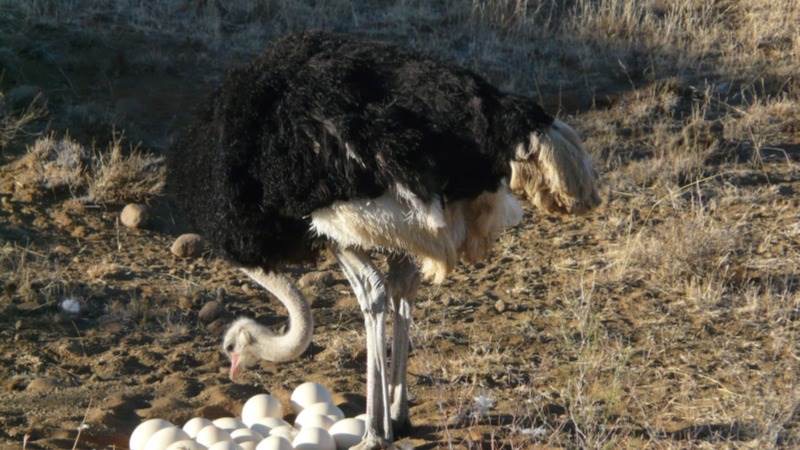
- Perhaps a parable of those who make a show of their religion and pride themselves in what are merely God’s generous gifts to them, but who are incompetent to guard the next generation against predators, for lack of care and understanding?
- And yet it is right to trust that God rules sovereign over that species too, even though it is beyond our faculties to understand the purpose (v17).
vv19-25: Fifthly, the battle horse. Whatever evil it stands for – self-reliance (Hos 14:3), desire for conflict (Isa 30:15-16), or pride (as contrasted by Zech 9:9) – a literal interpretation here is even less conceivable. vv36-30: Same for the hawk and the eagle (two other ritually unclean birds, Lev 11:13-16)
- These vultures take what is left (Isa 34:11) to swiftly devour when God judges stubborn unbelief (Ezk 17:3; Lam 4:19; Hab 1:8).
- Bringing the number of parables to seven, they are yet another clue that they are indeed parables (Gen 41; Mt 12:45; 18:21-22; 22:25).
Since God is never the author of any evil, He can be trusted for how He uses it
We started in chapter 1 by asking whether Job teaches us to “trust that God is good even when He is hidden, because everything has a purpose”. It is the other way round: We trust that there is a purpose despite the fact that it is completely hidden, because God is good. We trust God that He is good because He is God. And because we trust Him, we cease to suspect Him of any sinister motives or of being indifferent towards our afflictions: According to the parables in this chapter, God’s judgements are indeed inscrutable (Ro 11:33). Nevertheless, He can be trusted precisely because it is He who is God and always at work in all things. He has made Himself known, and therefore those who know Him trust His intentions, even though knowing His reasons is utterly beyond us, simply because we are not god.
*…God, is far from being inactive in all His creatures, and never suffers any one of them to keep holiday. But whoever wishes to understand these things let him think thus: — that God works evil in us, that is, by us, not from the fault of God, but from the fault of evil in us: — that is, as we are evil by nature, God, who is truly good, carrying us along by His own action, according to the nature of His Omnipotence, cannot do otherwise than do evil by us, as instruments, though He Himself be good; though by His wisdom, He overrules that evil well, to His own glory and to our salvation. Thus God, finding the will of Satan evil, not creating it so, but leaving it while Satan sinningly commits the evil, carries it along by His working, and moves it which way He will; though that will ceases not to be evil by this motion of God. In this same way also David spoke concerning Shimei: “Let him curse, for God hath bidden him to curse David.” (2Sa 16:10). How could God bid to curse, an action so evil and virulent! There was nowhere an external precept to that effect. David, therefore, looks to this: — the Omnipotent God saith and it is done: that is, He does all things by His external word. Wherefore, here, the divine action and omnipotence, the good God Himself, carries along the will of Shimei, already evil together with all his members, and before incensed against David, and, while David is thus opportunely situated and deserving such blasphemy, commands the blasphemy (that is, by his word which is his act, that is, the motion of his action), by this evil and blaspheming instrument.” In: Martin Luther, The Bondage of the Will. Grand Rapids (Christian Classics Ethereal Library, p166; emphasis added).
 Bibletogetherblog
One comment