
We are in the book of Job. This poem in the Bible explores why God allows suffering even though He is even by definition all-powerful and all-good. Job’s proverbial hardship serves as a framework to examine how theologians and philosophers turn against those who start to question their tradition.
Previously, Eliphaz summarized this tradition like a true businessman: Prosperity and health are the reward of godliness, whereas adversities are a punishment for freely choosing to break God’s laws. God pays you what you deserve. Bildad was the theologian who added what Job would have to do to buy back God’s grace: Make yourself acceptable. Now Zophar joins this triumvirate as the self-appointed psychologist who fancied to have special insight into why Job questioned their tradition, Job 11-14:
Zophar’s first speech (Job 11):
- 11:1-3 Instead of walking the walk, you only talk. We reject as empty talk whatever you say, also because we feel mocked of being doctrinally inferior. This makes you a terribly ineffective communicator: You don’t reach us. Learn from us how love commands that we shame you.
- 11:4 For how dare you assume that your doctrine is error-free that God regards you as clean? What could be more arrogant and more divisive than to view your interpretation superior to ours?
- 11:5-6 Evidently, God has not spoken to you. For whoever is enlightened by God understands that His wisdom consists of secrets, and that His truth has always two sides. Know then that your arrogance is a transgression of NT law* that would deserve much worse than what God the Merciful exacts from you now.
- 11:7-9 Why should we answer your argument on matters that are higher than the heavens and deeper than the underworld? Since these mysteries of God are off limits to understand for anyone, who are you to even ask? There would be no division were it not for your intolerance that only your interpretation of God’s sovereignty is right.
- 11:10-11 We too believe that God is sovereign. But he is also just and therefore would never let you suffer unless you are worthless, or if he found in you some hidden iniquity. We embrace this paradox to remain balanced.
- 11:12 But it is more likely that a wild donkey will become human than that your stubbornness can be taught humility by our superior understanding.
- 11:13-14 Faith in God’s sovereignty must be balanced by faith that we can prepare ourselves to receive God’s grace. As brother Bildad explained, and as brother Pelagius will remind you again in a few hundred years from now: It is up to our hands to let go of iniquity so that God may come to us.
- 11:15-19 No blessing will he then withhold from you, the final and highest one being that “…many will court your favor”. (Expect more on how the book treats this crucial topic, e.g. in Job 41:34)
- 11:20 But the fact how you are in trouble suggests that you have not prepared yourself sufficiently to be eligible. That alone is the reason of your death wish and your despair that you have described to us repeatedly (Job 3:3, 11; 6:9; 10:18-19)
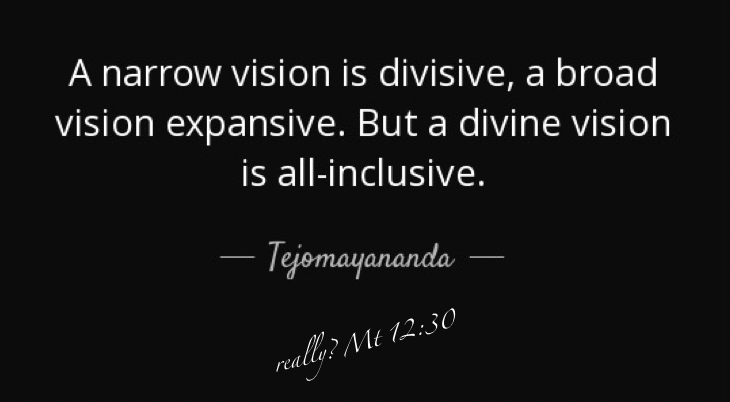
Well, who really divides us by talking nonsense?
Job 12:
- 12:1-5 You are wrong because you consider yourself superior, based on your prosperity. You think you are called to teach me, but you are telling me nothing that would be new to me.
- 12:6-9 And your notion of God’s justice is wrong. Robbers and blasphemers thrive and live secure, without the trials that God heaps on the faithful. Therefore, the whole creation can see that my trials cannot possibly be a punishment for these or any other offences.
- 12:10-12 Doesn’t the experience of God’s natural revelation in creation show that He must be the first cause of all things?
- 12:13 Without Him, we could not even breathe, let alone know anything. He holds in His hand everything and everyone:
- 12:14-21 His will alone prevails and can never be overruled by ours: God even causes the fall of nations and the stupidity of their politicians. He deprives of speech those who are trusted and takes away the discernment of the elders, v20 (NIV)
Job 13:
- 13:1-12 You would better remain silent than to pretend that your arguments are an answer (cf Job 32:12): They won’t deceive God who will surely rebuke you.
- 13:13-15 I have no choice; I must speak though it may cost me my head. It is my duty. Trying to save my skin by biting my lips is not safe.**
- 13:16-17 For I will be saved from the hypocrites (context: such as yourself; that is why you need to hear it)
- 13:18-19 I have not spoken rashly. I have full assurance that I am in the right. That is why I will not be silent anymore unless you can prove me wrong (cf Job 24:25).
- 13:20-28 (Pleading with God?)
Job 14
- 14:1-22 Job’s death wish, and why it is not based on faith in reincarnation: Unlike the root of trees that bud repeatedly in this creation (vv7-9), our days are numbered (v5), and we are appointed to live only once and will not rise again until a future day of judgement when the heavens and this present earth are no more, v12 (cf Heb 9:26; 2Pet 3:7-13).
- The theological argument here against the false hope in reincarnation comes seemingly unprovoked by any of the speeches of his ‘friends’:
- => Does Job address reincarnation anyway because that was a mainstream view (Zoroastrians), except among those following the resurrection faith of Abraham?
- By refuting the idea of reincarnation as a false hope, Job testified of his distaste for heterodox ideas.
* Granted, to go this far and invent ‘NT law’ as a new category to further obfuscate the dialectic of OT law (decalog) versus gospel, this takes a modern Zophar.
** Commentators who count 13:13-19 already as part of Job’s prayer in vv20-28 seem to give no convincing reason for doing so: Since Job until here spoke of God consistently in the third person singular, it would be strange if “your ears” in v17 would refer to God in the same breath. Furthermore, the imperative “Behold…!” throughout the book (including here in v18) never addresses God, but always the reader more than 100 times.
 Bibletogetherblog