
In chapter 3, Job first tells his friends that he wished the day of his birth were blotted out, vv1-6:
- by God himself,
- by absence of light,
- by gloom,
- by ‘deep’ darkness (underworld)
- by clouds above
- by blackness of day,
- and by thick darkness (of night)
The poet invokes no less than seven agencies (i.e. every agency). He feels that they all should have prevented life instead of allowing that it is afflicted by suffering: Better to abort the child than to let it be born into an unwanted life of meaninglessness and its self-perpetuating misery.
But Job didn’t die on the day he was born. A mother chose to hide him from the slayers of unwanted life and to raise him. His maker wanted him born for a purpose and used the love of this mother and of others to make sure he would live and become the man of whom we still read today, not just despite of adversity, but in and through it, Job 36:15 (cf Ja 5:11).
Job was work in progress. Since no one prevented his birth, his despair now calls for seven measures to at least ensure that no one may ever again regard his afflicted life worthy of being celebrated, vv6b-10:
- Declare my birthday a day of mourning
- Wipe out that day from the calendar
- Let no one enter to celebrate
- Let the shamans curse it (for more on the meaning of Leviathan, see ch 41)
- Let the stars remain dark
- Postpone the dawn of that day
- Or if it must come, let no eyes see it
vv11-18: Better to directly die at birth and join in death those who only for a short time enjoyed power, glory and wealth before they died too. For the weary will find rest nowhere else.
In vv19-23, Job addresses all who are plagued by misery and can relate to him and his worst nightmares. Who would not contemplate suicide in his circumstances? And why not? What stopped Job from using this exit? And what is the counsel of his story when such trouble befalls us?
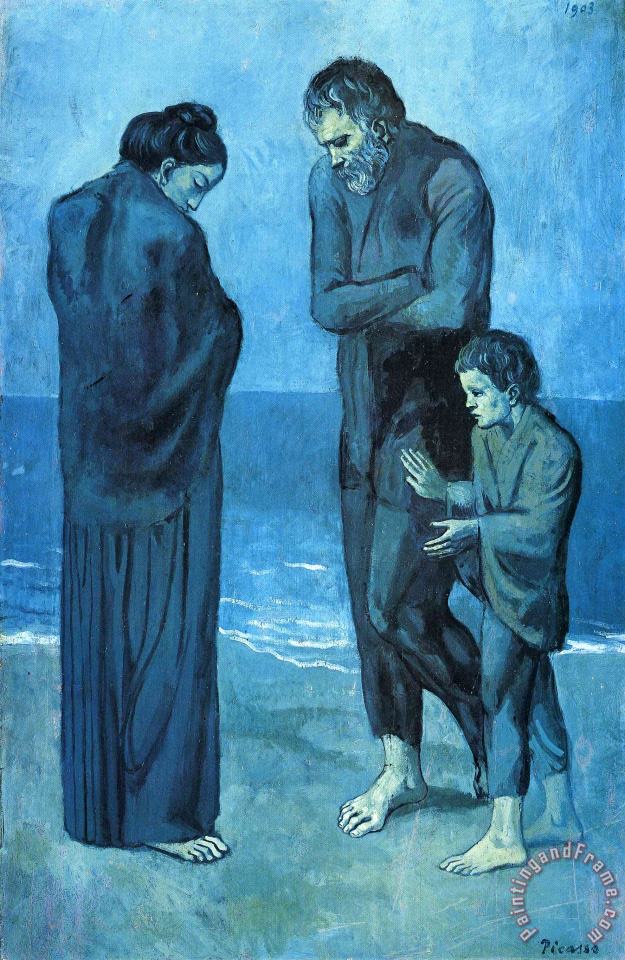
Job leaves no doubt that asking these questions is easier than answering them. And discerning what he found is not made easier by the fact that translators can sometimes only guess even the meaning of the Hebrew.
If Job is difficult to interpret, does the book itself reveal how we should go about it? One important clue is that this book was recognized as prophetic and included in the Bible. This is important, because according to Jesus, all of these Scriptures were inspired and written with the chief purpose to inspire faith in him, Jn 5:39. According to this rule, our interpretation of Job should lead to saving faith in the triune God who promised to become embodied in Jesus, or else it misses the point, 1Jn 4:2. So the question is: Does Job do that, and if so, how? How does the book of Job belong to that larger story of the Bible as a whole?
The poem testifies that God answered Job, but in a storm (Job 38:1). No attempt to make it comfortable or palatable for a fast food generation. No ‘Job in a nutshell’ version in prose. Any such shortcut would be ludicrous. Instead, to unpack God’s answer, whoever wrote the book of Job chose to do so in the form of riddles, and only after investigating first in no less than three dialectic discourses all the blind alleys how the world tries in vain to cut this Gordian knot: A religious world, nota bene, that claims to be wise and inspired even though they are not:
An outline of the chapters of the book of Job
- 1-2: The plot: Satan’s charge against piety and the religious
- 3: When life ceases to make sense
- 4-12: 1st round of dialectic discourse
- 13-21: 2nd round of dialectic discourse
- 22–24: 3rd round of dialectic discourse
- 26-31: Job undefeated, but left alone without an answer
- 32-37: Elihu, God’s evangelist to skeptics (four speeches)
- 38-39: God’s answer: What can be known of God from nature (general revelation)
- 40.1-5: Job humbling himself
- 40:6-41:34 God’s answer: His plan of salvation made known supernaturally (special revelation)
- 42:1-6 Job satisfied and repenting
- 42:7-17 (Epilogue): Job renewed and restored
- his opponents converted
- his brothers reconciled
- no word of Elihu again
It seems the author of Job felt that the wisdom of his prophetic insight would not be rightly valued were it not for these preceding philosophical debates. By refuting first the man-made answers, these speeches are there to show why this riddle about God’s apparent injustice cannot be solved other than by God Himself when He discloses Himself personally through the gospel in the person of Jesus Christ.
 Bibletogetherblog